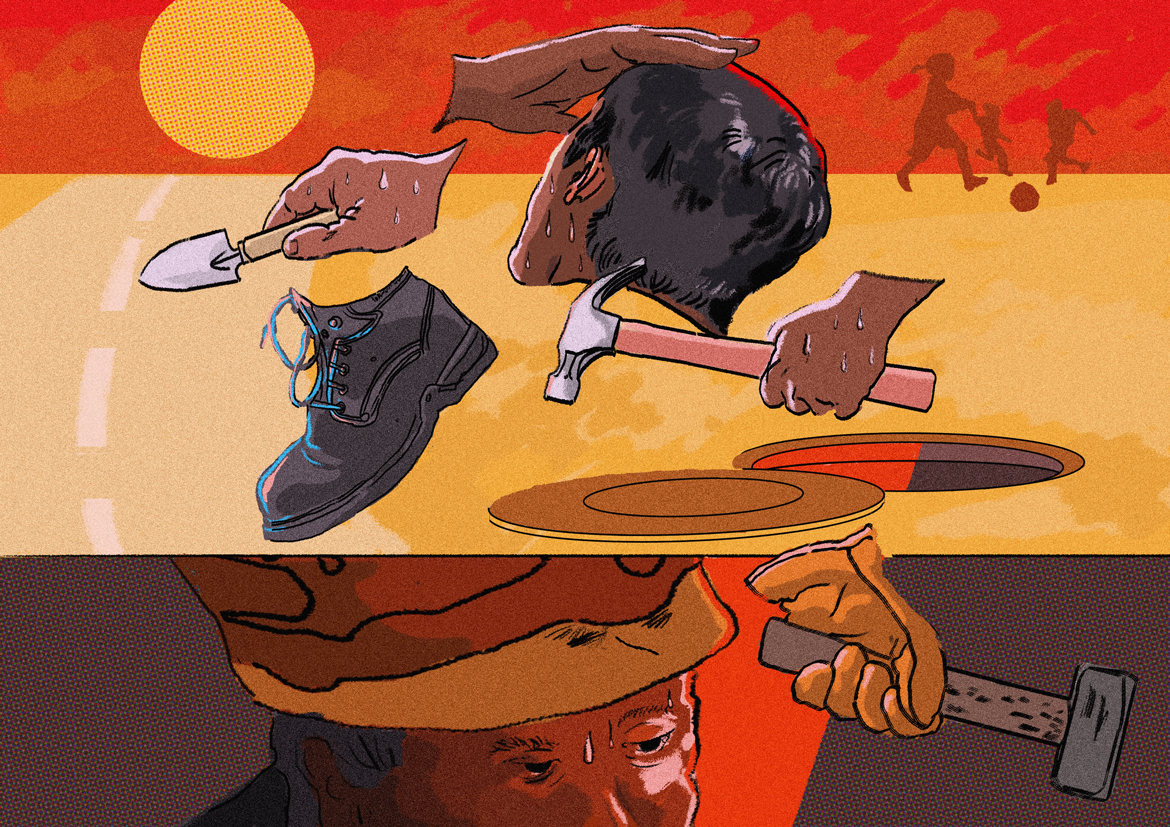

Detroiter Alejandro, 47, works all day under the open sky. He does finishing work in construction on driveways, sidewalks, and patios. Although he's worked in construction for years and knows how to manage in the heat, he said he still gets dizzy sometimes.
"The sun is very intense, you have to be working all day, your shirt completely soaked in sweat," Alejandro said in Spanish.
About four years ago, Alejandro said he was finishing a job when his sight started to blur. Concrete dries quickly, and he had to work fast in the intense heat.
"It was really hot but I had to finish the job right and quickly so the boss didn't get upset," Alejandro said. "It's difficult but you get used to it."
Over his career, he said he's never seen a presentation on heat safety, and said state regulators do not come to his jobs. His bosses simply tell him what work he's doing and where.
It's rare for jobs to provide water, let alone lunch, Alejandro said. Planet Detroit is withholding his full name due to fear of targeting by immigration authorities.
"There are bad days at work," and sometimes the pressure mounts, he said. If employers provided enough water, it would make it more comfortable to work in the heat, he said.
"I would like that managers consider us as human beings, not animals working without drinks," he said.
"I would like that managers consider us as human beings, not animals working without drinks."
— Alejandro, Detroit construction worker
Alejandro said he works in difficult circumstances to make sure his family has "everything" – bills that are paid and food on the table. He spoke with Planet Detroit while his children played soccer at Patton Park on a summer afternoon.
"We came to work, not to steal anything from anyone. We work to bring money home," Alejandro said.

Supported by
This story was produced as part of the Pulitzer Center's StoryReach U.S. Fellowship.
Learn about StoryReach FellowsHeat challenges surface at Southwest Detroit urgent care
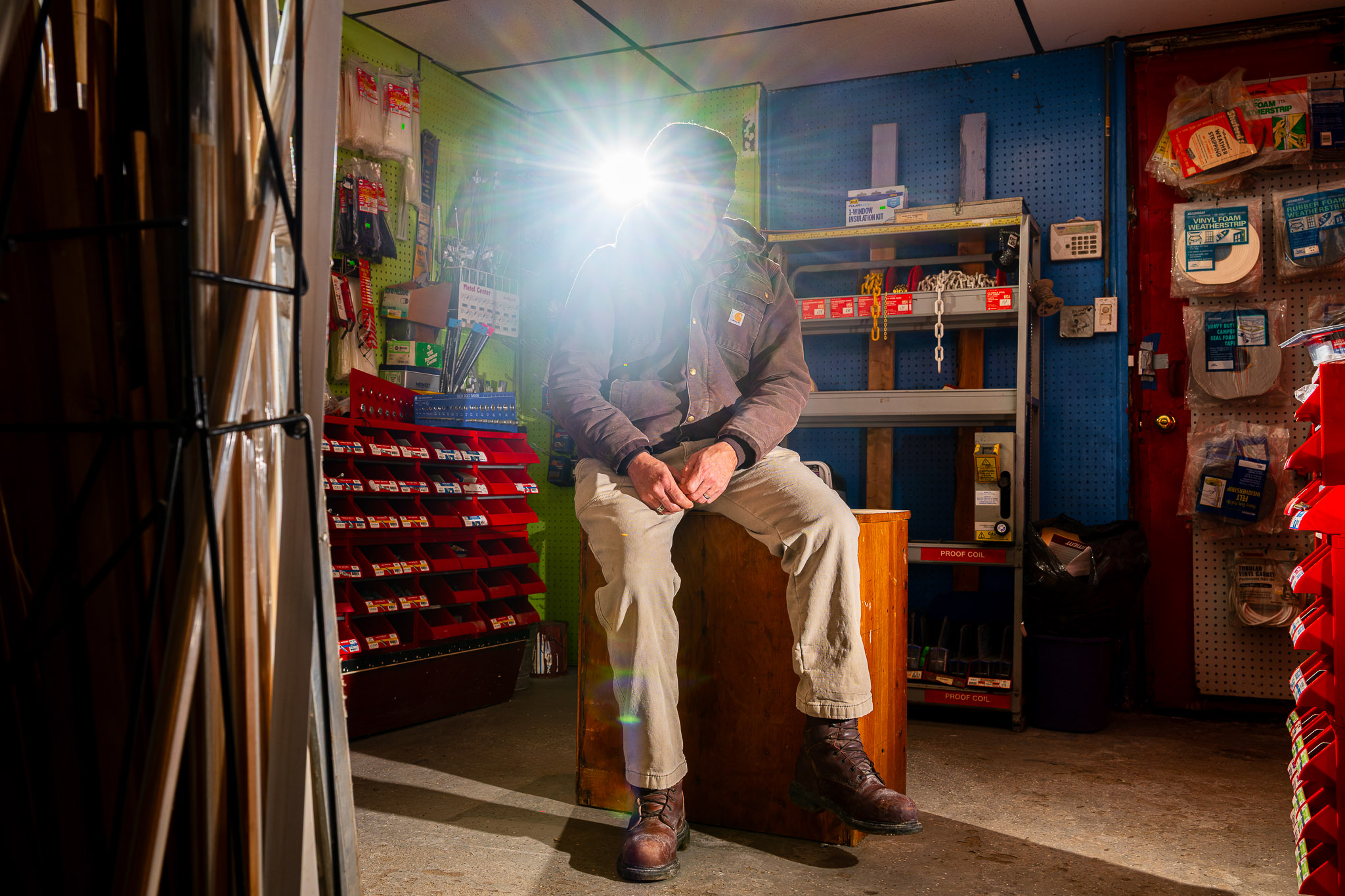
The roof you sleep under, the sidewalk you walk on, the HVAC system that's keeping your home at a comfortable temperature: each element was installed by someone working under increasingly hot conditions.
"Even the healthiest person can still get heat stroke or heat exhaustion, even if they drink a ton of water. Once they get heat stroke, they need to be in the hospital."
— Christopher Noah-Sayers, PA, Acadian Urgent Care Clinic
Christopher Noah-Sayers, physician assistant at Acadian Urgent Care Clinic in the Springwells neighborhood of Southwest Detroit, said during summer 2025 he saw "at least" one worker a week due to heat-related illnesses.
Outdoor workers in construction, roofing, or landscaping come in "very red in the face" from heat rash or heat exhaustion, he said.
"Anyone that's working outside, they don't get very many shade breaks, and a lot of them think just drinking enough water is enough," Noah-Sayers said. "They end up with heat stroke."
Taking frequent breaks in the shade is essential to preventing heat stroke, Noah-Sayers said, and many outdoor workers push through.
"Even the healthiest person can still get heat stroke or heat exhaustion, even if they drink a ton of water," Noah-Sayers said. "Once they get heat stroke, they need to be in the hospital."
Heat is the No. 1 weather-related killer in the United States, according to the National Weather Service. Heat claimed the lives of four workers in Michigan from 2011 to 2024.
Heat kills more Americans than hurricanes or tornadoes, yet people don't think of the dangers in the same dramatic way, and until recently, neither did policymakers.
The Michigan Occupational Safety and Health Administration (MIOSHA) knows of four heat-related workplace deaths, according to their records: in 2011, 2016, 2020, and 2024.
Heat impacts on health are generally underreported and misdiagnosed, a Michigan State University researcher who specializes in the issue of heat in the workplace told Planet Detroit.
On Aug. 30, 2024, the federal Occupational Safety and Health Administration (OSHA) proposed a heat injury and illness prevention standard that would require employers to plan for heat hazards in their workplace.
If enacted, the historic proposed rule would clarify employer obligations and the steps needed to protect employees from hazardous heat. The ultimate goal is to prevent and decrease the number of occupational injuries, illnesses, and deaths caused by heat.
OSHA has concluded public hearings on the proposed rule and will make a decision on how to proceed once the record on the hearing closes, a spokesperson for the agency said.
A 2021 version of the rule published in the Federal Register includes a chapter on climate change. In the current version from 2024, the words "climate change" are not mentioned.
According to the earlier version of the rule, "Climate change is increasing the frequency and intensity of extreme heat events…and workers will face an increased risk of heat-related illness due to heat exposure."
In the meantime, Latinos, who are overrepresented in construction, food processing, and manufacturing — sectors at the frontlines of climate risk — are still being affected by heat, yet few protections exist to safeguard them from rising temperatures.
People who are of Hispanic or Latino ethnicity accounted for nearly one-half of the foreign-born labor force in 2024, according to the Bureau of Labor Statistics.

Freeway work 'like a sauna'
Luis Hernandez, a 69-year-old retired construction worker and Wyandotte resident, was looking forward to a winter trip to Mexico when he spoke with Planet Detroit in September.
That evening, his adult children were visiting for dinner in his home, which features a large living room with tall ceilings. The walk up to the house was marked by beautiful landscaping with curving lines and colorful flowers.
This is what he worked for: a comfortable home and time with his family. His enjoyment is tempered by hearing loss and physical therapy for back problems, which he attributes to 24 years in highway construction.
In his years of working on state-funded projects, Hernandez said he helped build sections of I-75, I-94, the John C. Lodge freeway, and airports in Detroit, Kalamazoo, and Flint.
For most of his career, Hernandez worked with a crew of four others building manholes for freeway drains. The jobs started 30 feet deep at the bottom of a hole, and the workers spiraled up the cylinder, laying the drains block by block. One worker would lift a 15- to 30-pound block, and Hernandez would lay it with cement.
Each manhole took about an hour to complete, he said. In the summer, Hernandez said the manholes felt "like a sauna."
"I felt like I was suffocating because there was so much condensation," he said in Spanish. "When I came out, I looked like a mouse that had fallen into a bucket of water."
The crew had to stay "in the hole" until the job was done: no water and no food until they came out, and even then, they had to eat while they worked, he said.
"You're lucky if you had a place to eat. If you run out of water, that's it," Hernandez said.
Due to a lack of water, Hernandez said he often felt like he would collapse on the job.
"There came a time when I had to carry a little salt with me because they wouldn't give you any. They wouldn't let you go to the store to buy it. I mean, it was very difficult," he said.
Hernandez was sent home while working on I-94 in 2009.
"They sent us home only once. It was very, very, very hot," he said. "But from then on, they never, ever, took care of us."
Hernandez said his back is always bothering him and he feels tired.
"It's the payback of all of those years of hard physical work."
Some worksites are improving, Hernandez said. His sons work in construction on the Gordie Howe International Bridge project, where workers are supplied with "quite a lot" of mineralized water, he said.
Detroit heats up
In 2024, the earth's average surface temperature record was shattered as the warmest in history since recordkeeping began in 1880, according to NASA.
The third warmest year was 2025, according to the National Oceanic and Atmospheric Administration's global temperature record, which dates back to 1850.
Since 1970, the average annual temperature in Detroit has climbed 4.1 degrees Fahrenheit, according to Climate Central, a climate communication nonprofit.
The urban heat island effect, in which high temperatures and humidity combine to create dangerous heat index values, is a significant concern for Detroit and similar urban areas, according to a 2022 Michigan climate summary from NOAA.
Outdoor urban workers may face higher temperatures than rural workers from the urban heat island effect, which can raise city temperatures by 18 to 27 F during the day and 9 to 18 F at night compared to outlying areas, according to the Environmental Protection Agency.
The heat index is a marker of how hot a temperature feels to the body, measuring actual air temperature and relative humidity. Faced with high temperatures and high humidity, the body has a harder time cooling itself as intense humidity slows sweat evaporation, leading to dangerous heat stress.
Rising Heat Index Days in Detroit
Additional days per year compared to 1979 baseline · 1979–2023
Source: gridMET dataset, National Weather Service · Climate Central analysis
From 1979 to 2023, Detroit experienced 10 more days annually with a heat index of 80 F or higher; nine more warning days each year, with a heat index of 80 to 94 F; and an additional danger day where the heat index is 95 F or higher.
The statistics are from the gridMET dataset produced by a climatology lab at the University of California, and the National Weather Service.
The weather agency's local offices issue an extreme heat watch when such conditions are possible, and extreme heat warnings when dangerous heat is occurring or is about to occur.
A study published in the British international science journal Nature found that, in the second half of the 21st century, Americans' exposure to extreme heat will increase "four-to six-fold over observed levels in the late twentieth century."
Overnight lows have warmed faster than daytime highs, which may lessen opportunities for relief during heat waves, according to a Great Lakes climate adaptation partnership.
More frequent heatwaves and humid conditions elevate the risk of heat-related deaths and illnesses.
Outdoor workers pay price of warming climate
🗳️ Civic Action Toolbox
Why it matters
Outdoor and manual laborers, many of which are Latino workers, are facing rising, dangerous heat with few protections, leading to preventable illness, injury, and death. Detroit is heating up faster than in past decades, increasing the risk for workers who build and maintain essential infrastructure.
Who's making public decisions
OSHA: A new, national heat standard is under consideration that would require employers to put heat safety plans into effect.
Michigan OSHA: Enforces workplace safety, conducts inspections and consultations; lacks a specific heat standard.
Employers and industry leaders who decide whether to voluntarily adopt heat-safety practices while regulations lag.
Upcoming Meetings
Civic Actions: What You Can Do
What to watch for next
Did you take action? Let us know.
Civic resources compiled by Planet Detroit
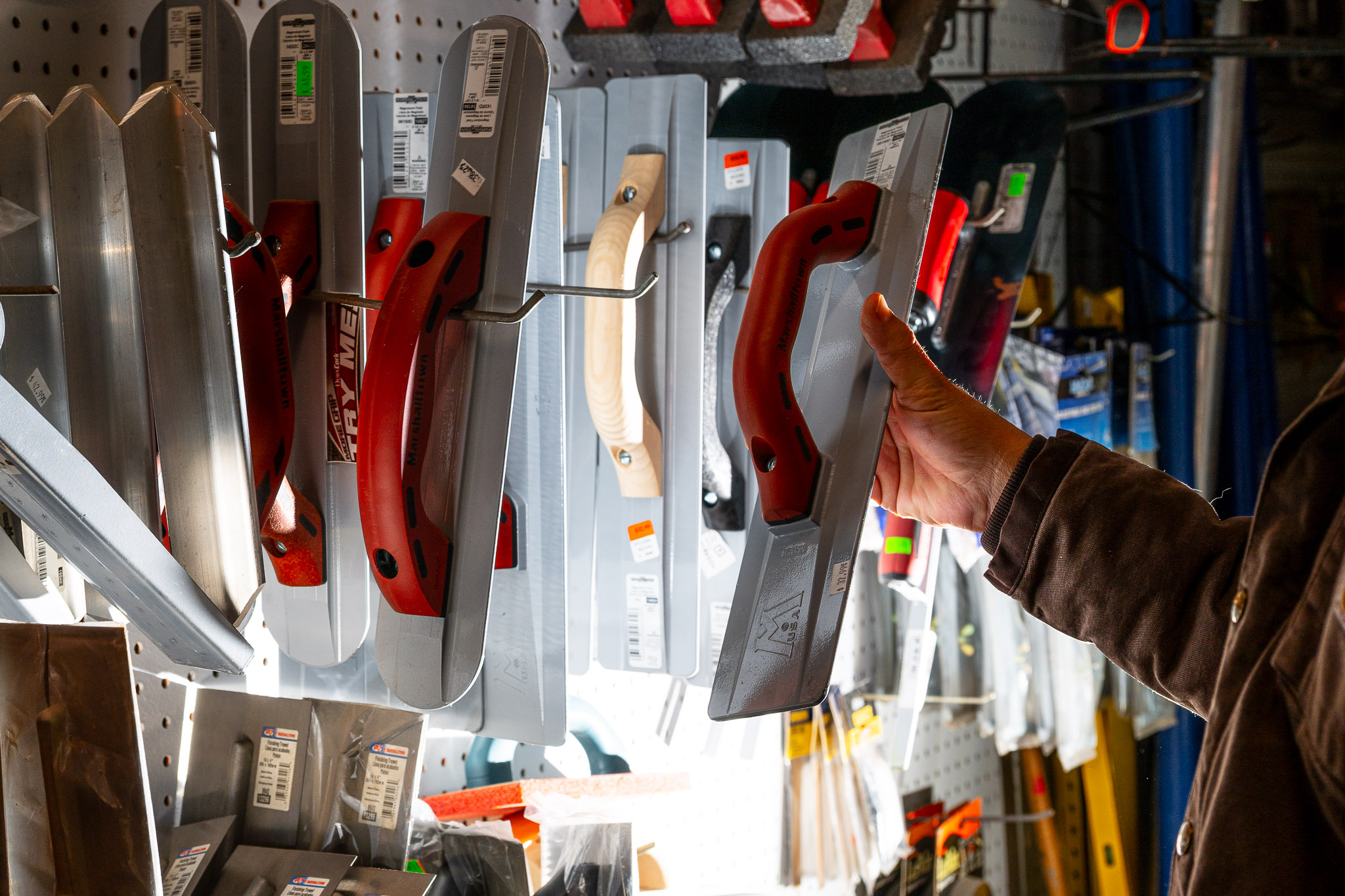
Construction workers represent 6% of the total U.S. workforce, yet they account for more than one-third of all reported occupational deaths associated with heat exposure, according to a study published in the American Journal of Industrial Medicine.
Outdoor workers disproportionately face greater heat-related health threats, especially in jobs involving strenuous activity like shoveling, manual sawing, pushing and pulling heavy loads, or walking at a fast pace, according to the U.S. Department of Labor's National Emphasis Program instructions — a temporary program that focuses OSHA's resources on a particular hazard.
Effective April 2022, the program on outdoor and indoor heat-related hazards expands on the agency's heat-related illness prevention initiative, aiming to encourage early employer interventions to prevent worker illnesses and deaths during high heat conditions.
When the heat index is 80 F or higher, serious occupational heat-related illnesses and injuries become more frequent, according to OSHA.
From 1992 to 2022, a total of 986 U.S. workers across all industry sectors died from heat exposure, including 334 construction workers, according to Bureau of Labor Statistics data.
Heat-related injuries, illnesses, and deaths at work are largely preventable, according to the National Integrated Heat Health Information System, a creation of NOAA and Centers for Disease Control and Prevention.
Yet Laurel Harduar Morano, associate professor and public health researcher at Michigan State University, said comprehensive nationwide standards and protections for workers contending with heat are lacking.
'In workplace death, one is too many'
MIOSHA does not define a specific temperature that is too hot for work, and the state agency does not have a heat standard.
Instead, MIOSHA encourages employers to enact elements of a heat illness prevention program to reduce the risk of work-related heat illness.
Employers are required to report a work-related fatality within eight hours and hospitalizations within 24 hours to MIOSHA.
OSHA's proposed national heat rule would cover all OSHA-jurisdiction employers working indoors or outdoors when the heat index is 80 F or higher — the temperature where serious harm becomes more frequent, according to the Labor Department.
Employers with less than 10 employees would not be required to have a written heat injury and illness prevention plan, and would instead communicate instructions verbally, according to the proposed rule.
The Occupational Safety and Health Act of 1970, administered by OSHA, does not cover self-employed individuals, immediate family members of farm employers, and workers whose hazards are regulated by another federal agency.
The workers whose hazards are regulated by another agency are in fields such as mining; nuclear; many aspects of transportation industries; and employees of state and local governments, unless they are in one of the states operating an OSHA-approved state plan, according to the Labor Department.
Under Michigan's state plan, small farms and employers can still be subject to MIOSHA enforcement, inspections, and compliance obligations, even where OSHA might be restricted.
Post-hearing comments on the proposed federal heat rule were accepted until Oct. 30, 2025. OSHA has concluded public hearings as part of the ongoing rulemaking process, said Juan Rodríguez, deputy regional director of the eastern region of the Labor Department which oversees OSHA.
"Once the record on the hearing closes, the department will take everything into consideration and make a decision on how to proceed," Rodríguez said in an emailed statement.
The long road to a heat standard
The Occupational Safety and Health Act creates OSHA, authorizing the federal government to inspect workplaces and requiring employers to provide a workplace "free from recognized hazards."
NIOSH issues first criteria document recommending heat standards. Revised in 1986.
NIOSH revises heat criteria, setting a formal criteria for a heat standard — still only a recommendation.
President Biden signs an executive order laying groundwork for the Labor Department's Climate Action Plan, which prioritized "worker safety as a serious climate resilience issue."
OSHA issues heat initiative memorandum and National Emphasis Program expands to cover outdoor and indoor heat-related hazards. Michigan adopts State Emphasis Program.
OSHA proposes historic heat injury and illness prevention standard for employers nationwide.
Public comment period closes. OSHA concludes hearings as part of ongoing rulemaking process.
Kristin Osterkamp, program manager at MIOSHA, said the state agency has seen a 30% increase in heat consultations in the last three years since the state program was created.
Temperatures are rising in Michigan, and in the last year, 225 employers asked for heat consultations, she said. They constitute a variety of employers in fields like construction and landscaping, and also indoor workplaces such as industrial worksites without air conditioning.
"It's a clear sign that employers are engaging with us before a problem happens," Osterkamp said.
"In workplace death, one is too many. Our trainers work daily with employers to implement plans to ensure our workers are going to be safe, (and) not wait for a death to happen."
— Kristin Osterkamp, MIOSHA Program Manager
She encourages employers to think about the details: who is monitoring for heat advisory warnings, what the trigger levels are on those days, and what their plan is when temperatures climb.
Not all employers call, she said. MIOSHA tries to be present at industry conferences, Osterkamp said, adding that she wants employers to find the state regulators "approachable and not be intimidated."
"What worries me is that people aren't going to report symptoms early, and they need to be mindful of checking in with themselves," Osterkamp said.
Without a heat stress rule in place, Osterkamp is left to enforce the federal general duty clause, a blanket provision requiring every employer to provide a workplace free of hazards.
"In workplace death, one is too many," Osterkamp said. "Our trainers work daily with employers to implement plans to ensure our workers are going to be safe, (and) not wait for a death to happen."
Employers doing it right
Even without a national standard, one employer in Northern Michigan said he upholds heat protections because his employees are the company's "life's blood."
Paul Mahon, senior project manager for Grand Traverse Construction in Traverse City, completed MIOSHA heat safety training in summer 2025.
The training helped Mahon "refine" his existing heat safety practices, he said, such as adding hand-washing stations and cooling methods.
The company's 58 employees provide commercial and industrial services across Northern Michigan, including laying concrete foundations, sidewalks, and slabs; performing carpentry in schools and commercial centers; and working with municipalities on building and retrofitting wastewater and water plants.
Summer temperatures in Traverse City averaged 77 F in the last three years. The temperature in the northern Michigan city reached as high as 94 degrees in late June 2025, according to the National Weather Service.
"We've seen those days in the mid-summer spans where the heat is pretty daunting, where the humidity is high," Mahon said.
A week before high heat index days, Mahon sends out reminders to his crews to plan accordingly. He stocks all worksites with water, coolers, and electrolyte drinks, and plans break times in cool trailers during peak temperatures, he said, allowing employees to recover.
"We just try to keep the same practices that we've always followed. We're not opposed to spending dollars to make sure everybody's safe," Mahon said.
"We're not opposed to spending dollars to make sure everybody's safe."
— Paul Mahon, Grand Traverse Construction
The heat awareness training that Mahon facilitates guides employees on the signs of heat stress and how to overcome it.
"With the summer conditions, we will be faced with some high extreme heat days … we just got to make sure that everybody has knowledge and (is) not overcome by heat," Mahon said.
A few Grand Traverse Construction employees are Latino, Mahon said. According to data from the U.S. Census Bureau, Latinos make up 4% of Traverse City's population, and 8% of Detroit residents.
Mahon said good employers look out for their employees: "we're nothing without" them, he said. If an employer is not looking ahead or providing the right equipment, additional break time, and resources, it impacts the employee, he said.
"It's just a bad condition to be in. We don't operate that as a business, and we wouldn't expect other businesses to operate that way either," Mahon said.
"So you got to take care of your employees across the board."
